Aeration Does Not Treat Sewage — Biology Does
Why can air alone not clean water, and why must biology lead STP design
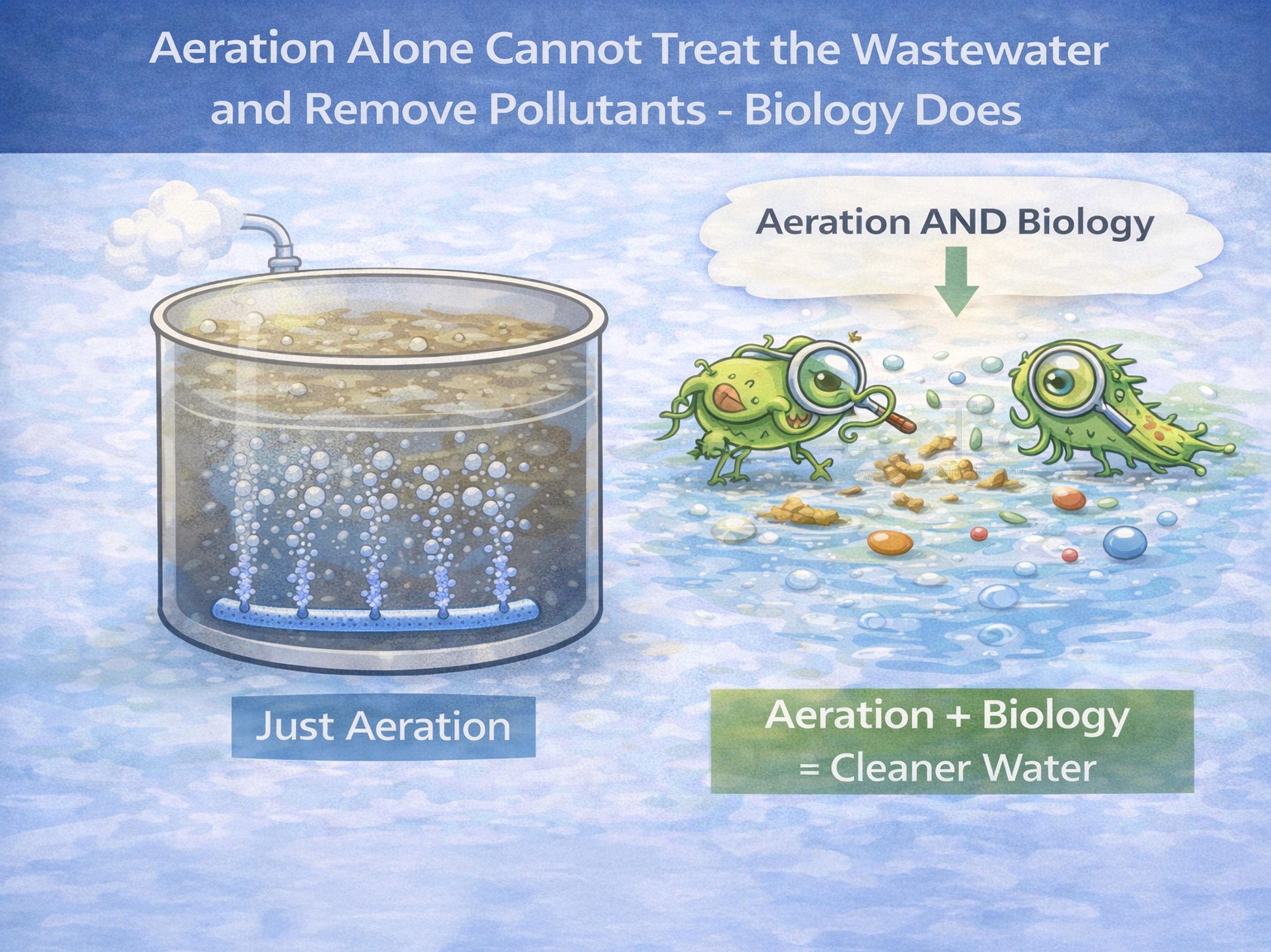
The Most Common Misunderstanding in STPs
In many sewage treatment plants (STPs), performance discussions revolve around:
Blower capacity
Aeration hours
Dissolved oxygen (DO) levels
When treatment does not meet expectations, the instinctive response is often to increase aeration.
Yet this overlooks a fundamental truth:
Aeration does not treat sewage.
Aeration only enables the biology that performs the treatment.
Understanding this distinction is critical to designing STPs that are stable, efficient, and aligned with expectations set by the Central Pollution Control Board (CPCB).
What Aeration Actually Does
Aeration has one primary function in an aerobic biological STP:
It supplies oxygen to microorganisms.
Aeration:
Maintains aerobic conditions
Supports microbial metabolism
Helps keep biomass mixed and active
What aeration does not do:
It does not break down organic matter
It does not convert inert COD into biodegradable COD
It does not control reaction timing
It does not guarantee treatment completion
Without active biology and available substrate, aeration is simply air passing through water.
Biology Is the Treatment Mechanism
Biological treatment occurs because:
Microorganisms consume biodegradable organic matter
Organic carbon is converted into biomass, carbon dioxide, and water
Nitrogen is transformed through biological pathways
These reactions depend on:
Availability of biodegradable COD
Proper acclimatisation of biomass
Adequate retention time
Stable operating conditions
Aeration only supports these reactions—it does not replace them.
Why More Aeration Does Not Mean Better Treatment
A common assumption in STP operation is:
“If treatment is poor, increase aeration.”
This approach often fails because it ignores biological limitations.
Situations where aeration adds no benefit:
When biodegradable substrate is already exhausted
When COD is particulate and hydrolysis has not occurred
When remaining COD is inert
When biology is carbon-limited
In these cases:
Oxygen remains unused
Energy consumption increases
Energy consumption increases
The system appears under-aerated, but is actually biology-limited.
Hydrolysis: The Step Aeration Cannot Accelerate
A significant portion of sewage COD is particulate.
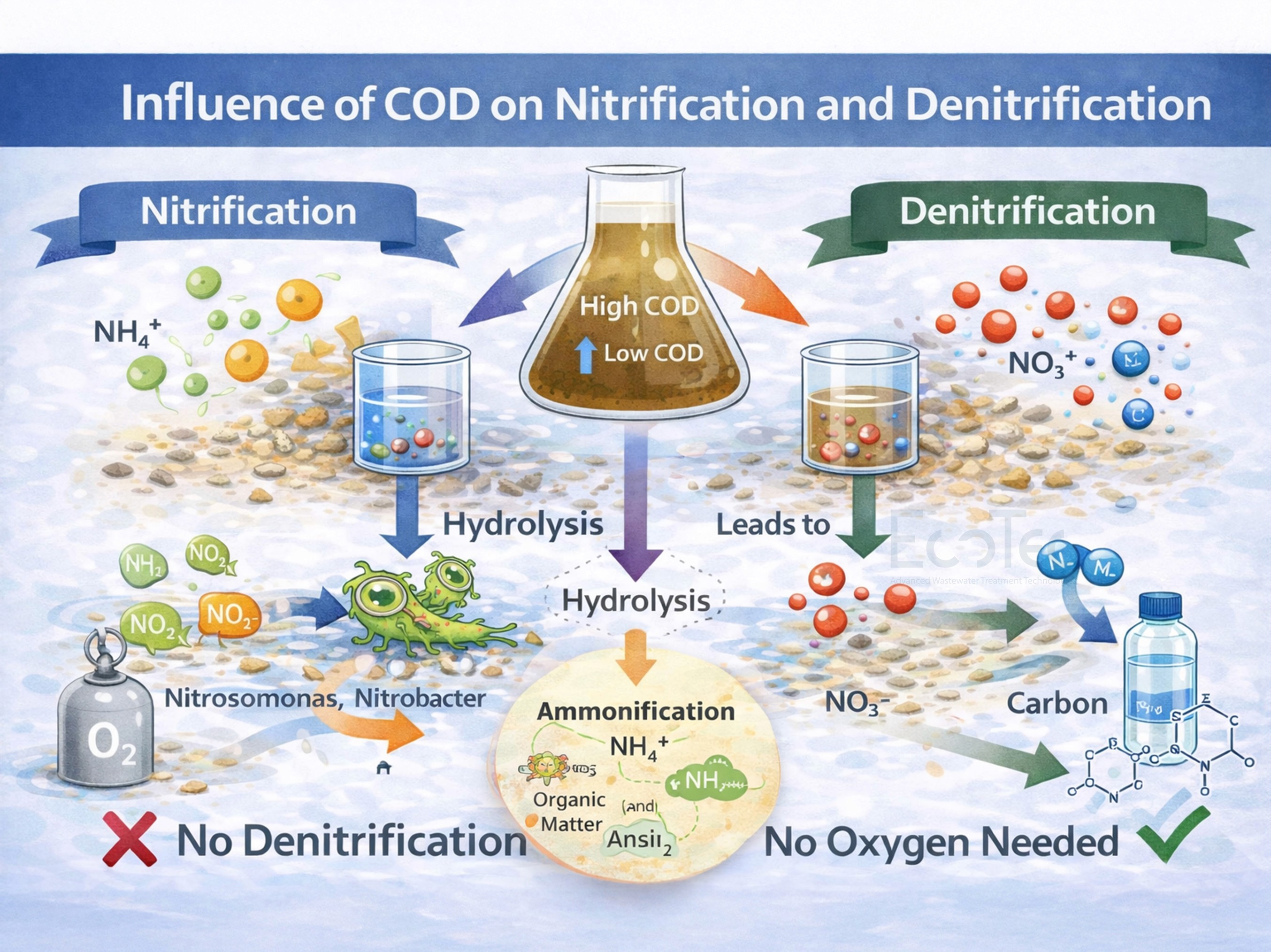
Before microorganisms can consume it, this COD must undergo hydrolysis.
Hydrolysis:
Is a biological, enzyme-driven process
Requires time
Is independent of oxygen concentration
Increasing aeration:
❌ Does not speed up hydrolysis
❌ Does not make particulate COD instantly available
This explains why:
Long aeration durations still show slow COD removal
STPs appear inefficient despite high energy input
👉 This connects directly to:
Reaction Timing vs Aeration Duration: Why Time Alone Is Misleading
Equalisation: Protecting Biology, Not Replacing It
Biology performs best under stable conditions
Without proper equalisation:
Organic load fluctuates
Oxygen demand becomes erratic
Biomass experiences stress
Aeration alone cannot stabilise these fluctuations.
Equalisation is required to:
Smooth load variations
Give biology time to respond
Prevent shock conditions
Ignoring equalisation places unrealistic expectations on aeration systems.
Why DO Is Often Misinterpreted
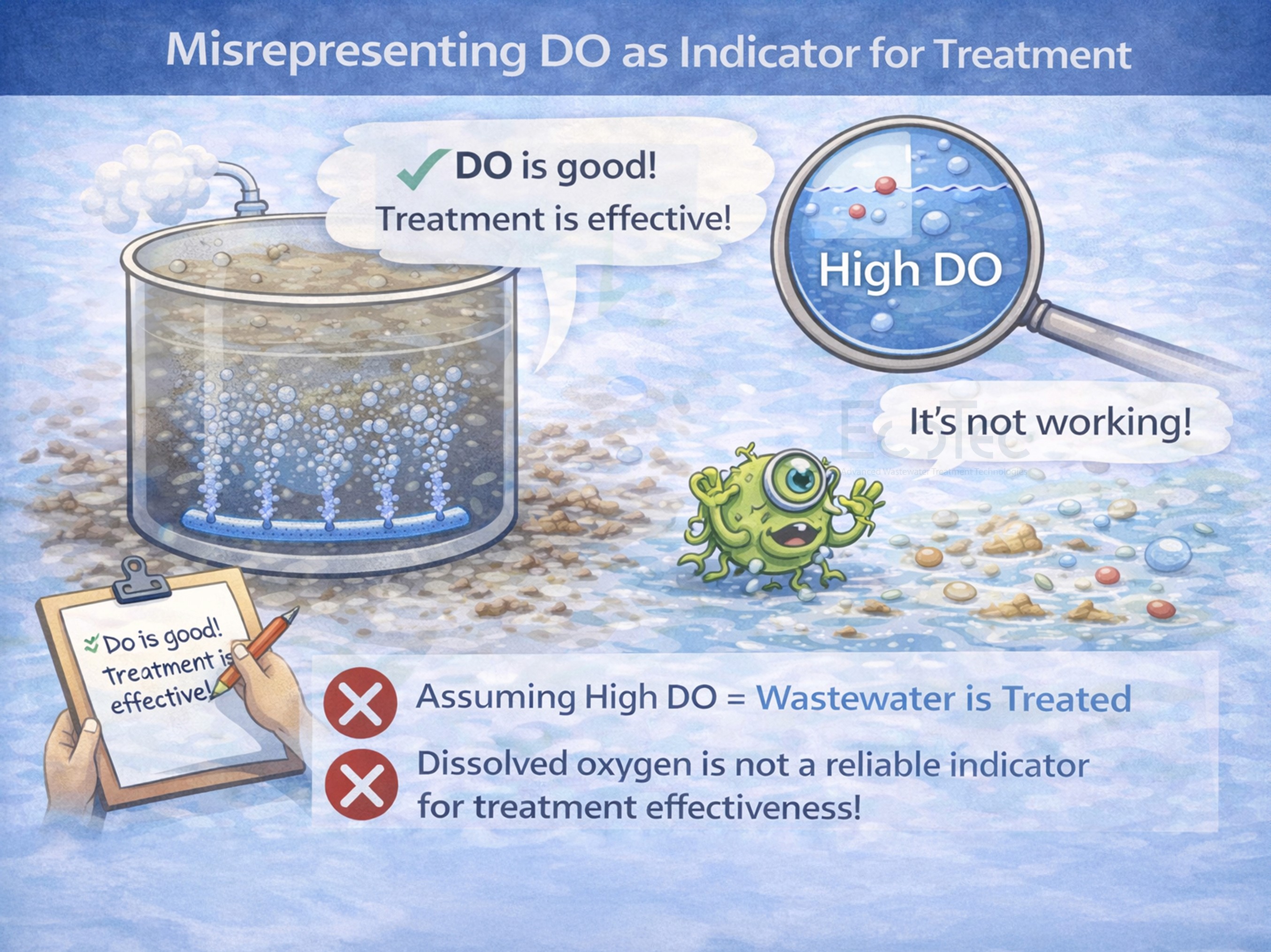
Maintaining a "good" Do value is often treated as proof of effective treatment.
In reality:
Do indicated oxygen presence
Do does not indicate substrate availability
Do does not indicate reaction completion
High DO can coexist with:
Low biological activity
Carbon limitation
Residual COD
Therefore:
Good DO does not necessarily mean good treatment.
Sludge Behaviour Is a Biological Outcome
Sludge characteristics depend on:
COD fractionation
Inert organic content
Sludge age and biomass health
Aeration:
Does not control sludge yield
Does not prevent inert accumulation
Does not ensure good settleability
Poor sludge behaviour is often a symptom of biological imbalance, not inadequate aeration.
The Correct Way to Think About Aeration
Effective STP design follows this logic:
Understand wastewater source
Decode COD behaviour
Allow for hydrolysis and equalisation
Enable stable biological growth
Design aeration to support biology
Aeration is the last step, not the starting point.
How This Fits into the Knowledge Hub
This article connects directly to:
COD Decoding: Understanding What Is Really in Sewage
COD Decoding Starts at the Source of Wastewater
and prepares the ground for:
What to Read Next
Conclusion:
Sewage treatment does not improve because more air is supplied.
It improves when biology is properly enabled.
Designing STPs around aeration alone shifts focus away from:
COD behaviour
Hydrolysis
Equalisation
Reaction Timing
Recognising aeration as an enabling function—not the treatment itself is essential for building STPs that are stable, efficient, and future-ready.